

Spotting signs of water damage on ceiling surfaces early can save a homeowner from a small repair turning into a larger demolition job. A new stain, a faint musty smell, or a patch of paint that suddenly looks tired often means moisture has already moved beyond the finish layer. The hard part is that ceiling damage rarely announces itself in one clean way. It usually shows up as a mix of color change, texture change, odor, and movement in the material above your head.
If you're standing under a suspicious spot right now, the safest move is to treat it as active until you prove otherwise. Ceiling water damage can hide above drywall, plaster, acoustic tile, or a drop ceiling long before a drip appears — and hidden damage can show up weeks before visible leakage does. Mold can begin within 24 to 48 hours after moisture intrusion, which makes timing matter more than appearance alone. That's why a small-looking spot deserves a real inspection, not a quick repaint.
1. Water Stains and Discoloration
The most common ceiling warning sign is also the one people dismiss fastest. Yellow, brown, rust-colored, or light-brown rings often mean water has moved through the ceiling assembly and left behind minerals, dust, and other residue as it dried.
A fresh stain is usually lighter and less defined. Older stains tend to darken, widen, or form rings at the edge where the moisture stopped and started over time. In a bathroom, that can come from a slow roof leak above the vent stack. In a kitchen, the source may be plumbing hidden over a second-floor bath. In commercial spaces, ceiling discoloration often traces back to HVAC condensation or a roof membrane problem that looked small from the office floor.
What to Do First
- Photograph the stain immediately. Use a phone photo from a few angles and include the date in your notes for insurance records.
- Watch for growth. A stain that expands, darkens, or develops a sharper edge usually means the moisture is still active.
- Check the surrounding ceiling with a moisture meter. Problem readings around damaged drywall often show up before the surface fails.
- Don't paint over it. The stain will usually bleed back through, and the hidden moisture still needs to be addressed.
- Tell the dispatcher what you see. If you're calling Endswell's Burbank emergency cleanup team, mention the stain size and location so the crew can bring moisture mapping gear.
Practical rule: a stain is a clue, not a finish problem. If the color changed because of water, the source still matters.
2. Sagging or Bulging Ceiling Materials
A ceiling that sags, bows, or bulges is already telling you the material has lost strength. That applies to drywall, plaster, acoustic tile, and drop ceiling panels. Once the assembly holds enough water, gravity wins.
This is the point where the issue stops being cosmetic and starts becoming a safety concern. A swollen bathroom ceiling after a burst supply line is one version. In commercial offices, sagging drop tiles after roof membrane failure or sprinkler discharge can mean the grid above is holding far more moisture than it should. Basement suspended panels are especially risky, because water can collect overhead long before anyone sees a drip.
If you see a bulge, don't keep testing it with your hand. The material can fail suddenly, and wet ceiling debris is messy, heavy, and often contaminated.
Do not stand directly under a ceiling that's bowing downward. If the material is already moving, it's closer to collapse than most people think.
Immediate Response
- Clear the area below the damaged section. Keep people, pets, and furniture out from under it.
- Place buckets or tarps only if you can do it safely. They help protect flooring, but they don't make the ceiling stable.
- Do not remove loose tiles without supporting the grid. In a drop ceiling, one tile can shift the load and bring down adjacent panels.
- Call for emergency extraction and containment. Endswell's water damage cleanup team in Burbank should be contacted right away when the ceiling is visibly deforming.
A bulging kitchen soffit above cabinets, for example, may hold water from a slow plumbing leak that never reached the floor. By the time the bulge appears, the hidden section has often been wet long enough to need more than drying alone.
3. Soft or Spongy Ceiling Material
A ceiling can look intact and still be failing beneath the paint. If drywall, plaster, or ceiling tile feels soft, crumbly, or spongy under gentle pressure, the water has already penetrated deep enough to change the material itself.
That tactile change matters because it usually means the surface isn't just damp. It's breaking down. Bathroom acoustic tile can turn mushy after a slow roof leak. Basement drywall may crumble after sump pump failure. Laundry room ceilings often soften around a water heater rupture where the visible stain is smaller than the actual wet zone above it.
Use only light pressure when checking firmness. If it yields easily, stop testing. More handling can spread debris and stir up contaminants.
Safe Handling Matters
- Wear an N95 mask and disposable gloves if you need to touch or sample the material.
- Note the exact edges of the soft area. A small soft center with a wider firm border often points to an active wet core.
- Keep your probe gentle. A plastic tool or fingertip pressure is enough to learn whether the material is sound.
- Preserve any suspect sample in a sealed bag if mold testing or remediation may follow.
- Tell the restoration crew where it feels soft. That helps them bring containment supplies and plan removal cleanly.
Soft ceiling material is rarely salvageable in place once it has broken down. Drying may still help adjacent framing, but the compromised section itself often needs removal. That trade-off is frustrating for owners who hoped paint alone would fix it, yet it prevents a much larger hidden problem later.
4. Mold Growth and Dark Spots
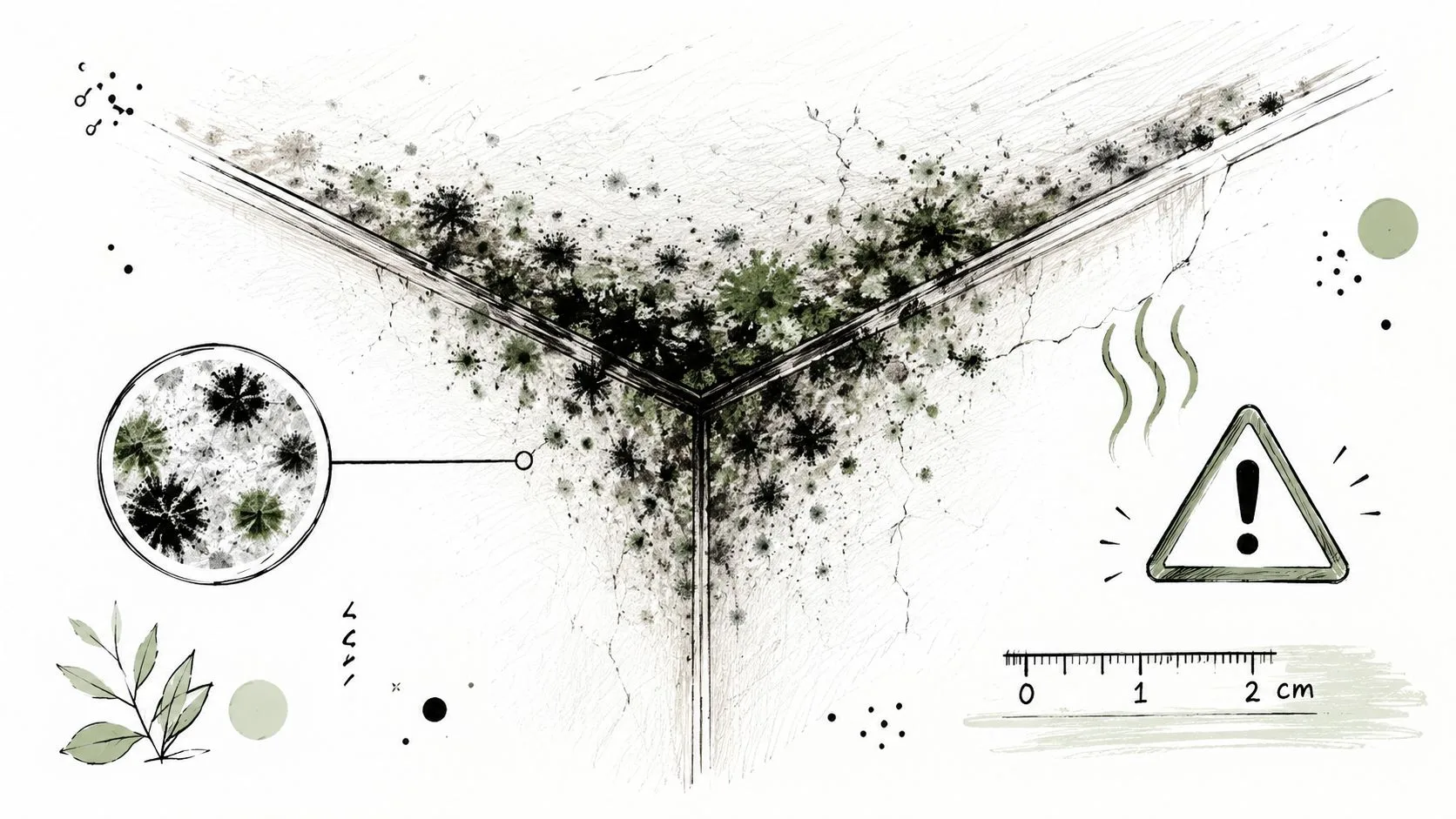
A ceiling with visible mold is usually a sign that the leak has already been active for a while. Black, green, white, or fuzzy growth means moisture stayed in place long enough for colonization, and the early mold window makes every dark spot worth a close look.
The shape and location matter. A fuzzy patch in a bathroom corner after a roof leak points to a different problem than a greenish area on a commercial drop ceiling where HVAC condensation keeps returning. White growth on basement wood framing often points to a moisture source that has been cycling for some time. A bedroom ceiling with mold after a hidden line leak usually means the air and materials around the leak stayed wet long enough for spores to take hold.
What Not to Do
- Don't wipe it dry. That can spread spores and push contamination deeper into porous material.
- Don't use bleach on porous ceiling materials. It does not fix growth inside drywall or wood.
- Don't keep the room sealed up and hope it disappears. Moisture trapped above the ceiling usually keeps feeding the problem.
- Do document the growth. Take photos from multiple angles before anyone disturbs it.
- Do tell the contractor about any odor. Smell often helps trace the wet area beyond what the eye can see.
Sometimes the first clue is only a few dark freckles — then the source turns out to be a larger hidden leak above the finish. If the spots feel fuzzy, slimy, or powdery, or if they changed after rain or humidity spikes, tell the crew that up front and ask for Endswell's mold remediation team in Burbank. That detail helps them decide on containment, HEPA filtration, and removal strategy.
5. Peeling Paint and Bubbling Finish
Paint that blisters, peels, or bubbles is often the ceiling's early protest against trapped moisture. Water separates the paint film from the substrate, and the finish starts lifting before the drywall fully fails.
This sign is easy to overlook because it can look like a bad paint job. In reality, it often marks the path of water migration. Kitchen ceilings bubble near light fixtures from upstairs bathroom leaks, bathroom corners peel after long-term shower condensation, and hallway paint bubbles where attic moisture tracks along a roof leak path. Commercial office ceilings can show the same symptom when a condensate line drips intermittently above the ceiling plane.
Quick Field Check
- Press the bubble gently. If it feels soft, moisture is probably still present.
- Map the cluster. A line of bubbles can point to the leak path better than a single spot.
- Check nearby drywall with a moisture meter. High readings around the defect suggest the problem is still live.
- Hold off on sanding or scraping. You can make the repair harder and spread contaminated dust.
- Ask whether drying can save it. Some surfaces recover after fast intervention, others don't.
A little bubbling finish is one of the more salvageable signs if the source is caught early. A large patch, especially one that keeps returning, usually means the substrate below is already compromised. That's where a restoration tech has to decide between controlled drying and full material removal.
6. Musty Odor Without Visible Growth
A ceiling doesn't need visible mold to have a moisture problem. A persistent musty, earthy, or old-book odor from overhead often means hidden growth inside insulation, framing, or a ceiling plenum.
That smell is easy to rationalize away because the room may still look clean. Don't do that. Odor often shows up before staining, especially where water has migrated sideways inside a multifamily unit, behind a commercial ceiling, or through HVAC paths. Seasonal humidity can make the smell stronger, but humidity usually reveals a problem that's already there rather than creating a brand-new one.
If the smell gets stronger after rain or on humid days, the source is probably still being fed.
How to Narrow It Down
- Check whether the odor is constant or intermittent. A constant smell suggests ongoing moisture, while a recurring smell can point to a leak that reactivates.
- Note where the odor is strongest. Ceiling vents, exterior walls, and room corners often lead to the source.
- Avoid masking the smell. Air fresheners and ozone treatments can hide the clue without fixing the wet material.
- Tell the inspector exactly what it smells like. "Earthy," "damp cardboard," and "old books" are useful descriptions.
- Expect concealed work. If the odor is coming from above the ceiling, the next step may be air sampling, thermal imaging, and targeted removal.
This is one of the most underrated signs of water damage on ceiling surfaces because there may be no visible defect yet. The ceiling can look fine while the cavity above is already contaminated.
7. Discolored or Warped Joint Tape and Mud Seams
Drywall seams tell the truth quickly. Joint tape and mud are thin, water-sensitive finish materials, so if they discolor, warp, bubble, or separate, moisture has likely reached the seam and the board behind it.
A lot of ceiling damage gets misread as a bad tape job. Brown staining along a basement seam may point to foundation moisture overhead. Soft mud at a second-floor hallway seam often comes from roof water tracking through the attic. In a kitchen soffit, warped seams can reveal a slow plumbing leak that never made enough water to drop from the ceiling but wet the finish over and over.
What to Inspect Closely
- Run a fingernail or plastic probe along the seam. If the mud crumbles or feels soft, it's not stable.
- Look for lifted tape edges. Separation often means the bond failed after repeated wetting.
- Compare the seam to nearby board. A moisture gradient helps distinguish a localized leak from a broader wet area.
- Photograph close-up details. Joint damage can look minor in a wide shot but severe up close.
- Expect removal in some cases. Once seam compound has been saturated, patching over it often fails.
When the seam damage is uniform across a long run, it can suggest standing moisture above the line. When it's localized, the leak path may be narrow and easier to isolate. Either way, seam distress is useful because it maps where water traveled before the ceiling finish gave up.
8. Rust Staining and Oxidation on Metal Ceiling Components
Rust on ceiling hardware is a warning that moisture has been present long enough to attack metal. That can show up on fasteners, ducts, steel framing, or supports above the finish surface and then bleed through to the ceiling below.
The color is usually orange to reddish-brown, but the key issue is not the shade. It's what the rust says about exposure. Bright, active rust often means moisture is still happening. Darker rust may mean the leak is older, but not necessarily fixed. Warehouse steel joists streak after roof leaks, basement supports stain after foundation seepage, and industrial ducts drip rust where condensation keeps cycling in the same spot.
Track the Condition, Not Just the Stain
- Take close-up photos with a size reference. A coin or tape measure helps show progression later.
- Check whether the stain is active or stable. Fresh orange staining deserves more urgency than an old dark mark.
- Use a moisture meter beside the rust. Metal doesn't read the same way as drywall, so check adjacent materials too.
- Watch for growth over time. Expansion usually means the source is ongoing.
- Ask whether a structural review is needed. Heavy corrosion can justify more than a drying plan.
Rust on exposed metal can also show up as a stain on the finished ceiling below, which is why the surface mark sometimes understates the damage above it. In multifamily and commercial buildings, that matters because the visible spot may be the last symptom, not the first.
8-Point Comparison of Ceiling Water Damage Signs
| Sign | Detection Complexity | Resource Needs | Severity & Impact | Practical Tip |
|---|---|---|---|---|
| Water stains and discoloration | Low — visually obvious; may need moisture mapping | Photos, moisture meter for confirmation | Variable; can be cosmetic or indicate an active leak | Photograph with date; don't paint over it |
| Sagging or bulging materials | High urgency — obvious structural deformation | Emergency containment, extraction, structural support | Severe; imminent failure and replacement likely | Clear the area, restrict access, call emergency services |
| Soft or spongy material | Medium-high — tactile confirmation of deep saturation | PPE, containment, sampling, removal and disposal | Severe; material usually unsalvageable | Avoid disturbing; wear N95/gloves; note exact locations |
| Mold growth and dark spots | High — visible growth requires containment protocols | HEPA filtration, air testing, certified remediation team | High severity and health risk; remediation required | Do not touch or clean; document photos; call certified pros |
| Peeling paint and bubbling finish | Low-medium — early/active moisture sign | Moisture meter, targeted drying, possible repainting | Low-medium; salvageable if dried promptly | Gently press bubbles to test; avoid scraping |
| Musty odor without visible growth | Medium-high — locating the source requires testing | Air sampling, thermal imaging, specialist inspection | Potentially severe (hidden colonization) | Note when the odor appears; avoid masking it; request air testing |
| Warped joint tape and mud seams | Medium — seam probing and visual inspection | Moisture meter, close photos, possible cavity opening | Medium-high; indicates drywall penetration | Gently probe seams; measure the moisture gradient first |
| Rust staining on metal components | Medium — visible staining following framing lines | Moisture mapping, structural assessment, metal treatment | Medium-high; suggests prolonged or cyclical moisture | Photograph with scale; monitor progression over time |
Ready to Address Ceiling Water Damage?
Recognizing these signs of water damage on ceiling surfaces early can keep a small leak from turning into a mold problem, a structural repair, or a longer insurance claim. The biggest mistake homeowners make is waiting for the drip. By the time water is coming through the ceiling, the assembly above it has usually been wet long enough to affect finish materials, framing, or both.
Use the clues together. A stain with peeling paint means more than one layer is involved. A musty smell with no visible growth still deserves attention. A sagging section, soft spot, or rust streak changes the job from cosmetic repair to a damage-control issue. The right response depends on what you find, but the first step is always the same: document it and keep moisture from spreading.
If you're managing a home, rental, or commercial property in Los Angeles County, don't wait to see whether the ceiling gets worse on its own. Endswell Restoration's 24/7 team serves Burbank, Los Angeles, Glendale, Pasadena, Santa Monica, and West Hollywood with drying, containment, mold remediation, and moisture-mapping equipment. Call (800) 351-8009, share what you're seeing, and get a technician out before the damage spreads further.